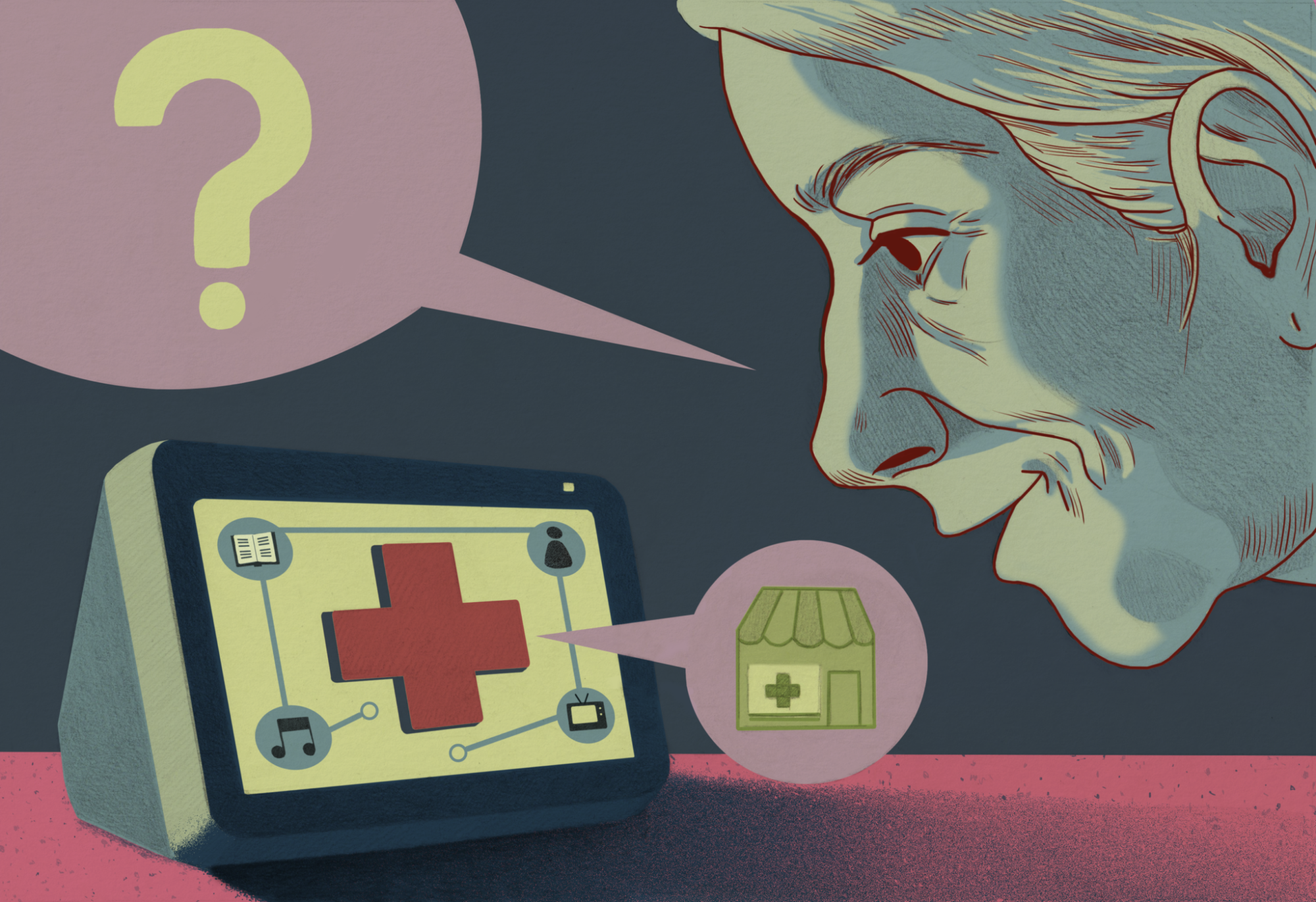
Opening a new fundraising market for the British Red Cross: gaming streamers.
Context
A 6-month pilot project whilst working at British Red Cross.
I led the campaign end to end: research, funnel build, marketing strategy, analytics and optimisation — working with legal on risk mitigation, and with Twitch, Tiltify, corporate partners, event managers and internal teams on delivery.

Charities in the US were beginning to build fundraising opportunities for a new audience: streamers. Nobody in the UK had done it successfully.
For the British Red Cross this was unfamiliar territory in every direction. The average donor age was 67. There was no in-house experience of the streaming market, and no UK precedent to learn from.
Challenge
How do we engage young streamers to fundraise for us without compromising our fundamental values?
Three problems at once.
- Young — the audience was decades younger than our existing donor base.
- Streamers — a market we had no experience in, and hadn’t seen anyone succeed in in the UK.
- Fundamental values — ethically complex: a humanitarian organisation raising funds from streams of, among other things, war games.
Approach
Discovery to scale: four stages built on testing, honest failure, and a data-led pivot.
Discovery & setup
Market research plus interviews with both experts and streamers, to understand what streamers actually wanted and what charities entering the space were finding.
Four things came out of it. Streamers responded most to our emergency work — the appeal of going live in response to something current. They wanted relationships that didn’t feel transactional, with people who understood gaming. They suggested establishing credibility in the space before running a general campaign. And internally, we needed a plan to manage the risk of association with value-undermining content.
That last one was the hardest, and it needed solving before anything else could start. Working with the legal team, we built a mitigation plan covering the risks of a humanitarian organisation being associated with content that could undermine its values — the practical question of what happens when someone raises money for the Red Cross while streaming a war game. It gave the organisation a defensible position, and the campaign a green light.
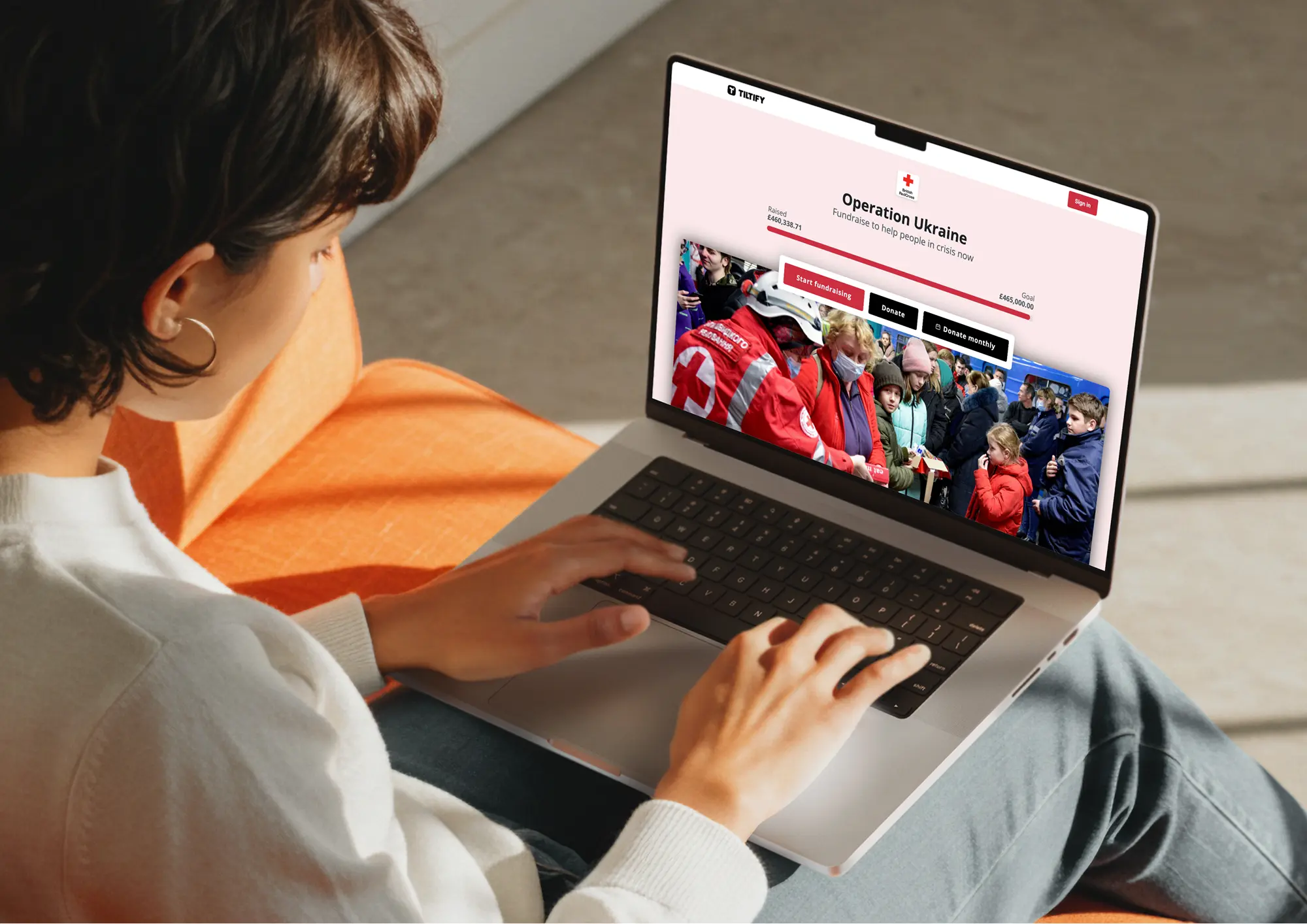
Alongside the research, I built the core infrastructure for the conversion funnel: marketing strategy, ads, landing page, fundraising page and data dashboard. The point was to be able to launch fast and learn faster.
Launch & track
A marketing strategy optimised around learning and cost, mixing organic, paid and viral channels — starting on Facebook and Instagram to test messaging and content.
Working with Twitch, Tiltify, corporate partners, event managers and internal teams, I ran a 24-hour influencer streaming event to build viral awareness: 100+ streamers contacted, engagement tracked, 12 locked in.
The landing page was built to A/B test messaging and hooks. The analytics setup ingested data from ads through to fundraisers, so I could read the whole funnel from day one.
Diagnose & pivot
The initial marketing didn’t perform. I went into the funnel data, interviewed people who had signed up and people who hadn’t, and read the comments and feedback to work out why.
Four findings changed the campaign:
- Focus on gamers. It’s much easier to get people to do one new thing than two. The people signing up were already familiar with streaming, so all the content pivoted towards gaming.
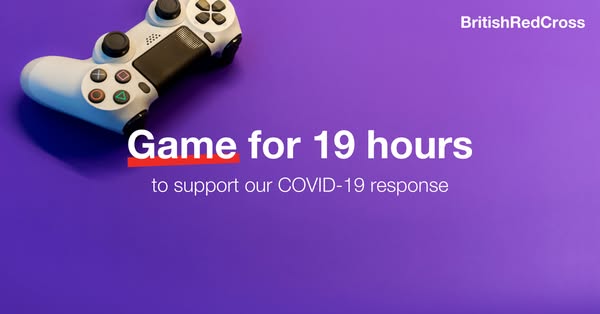
- Don’t try to be clever. After A/B testing many variations of creative and copy, the single biggest driver of quality traffic was unambiguous imagery and messaging: gaming controllers and the challenge.
- A simple, catchy ask. Instead of leaving the ask open and creating choice paralysis, we gave people a specific challenge that nodded to the cause — game for 19 hours, for COVID-19.
- No memes. They looked great on paper: low CPM, high click rate. But the traffic was low quality and didn’t convert to fundraisers.
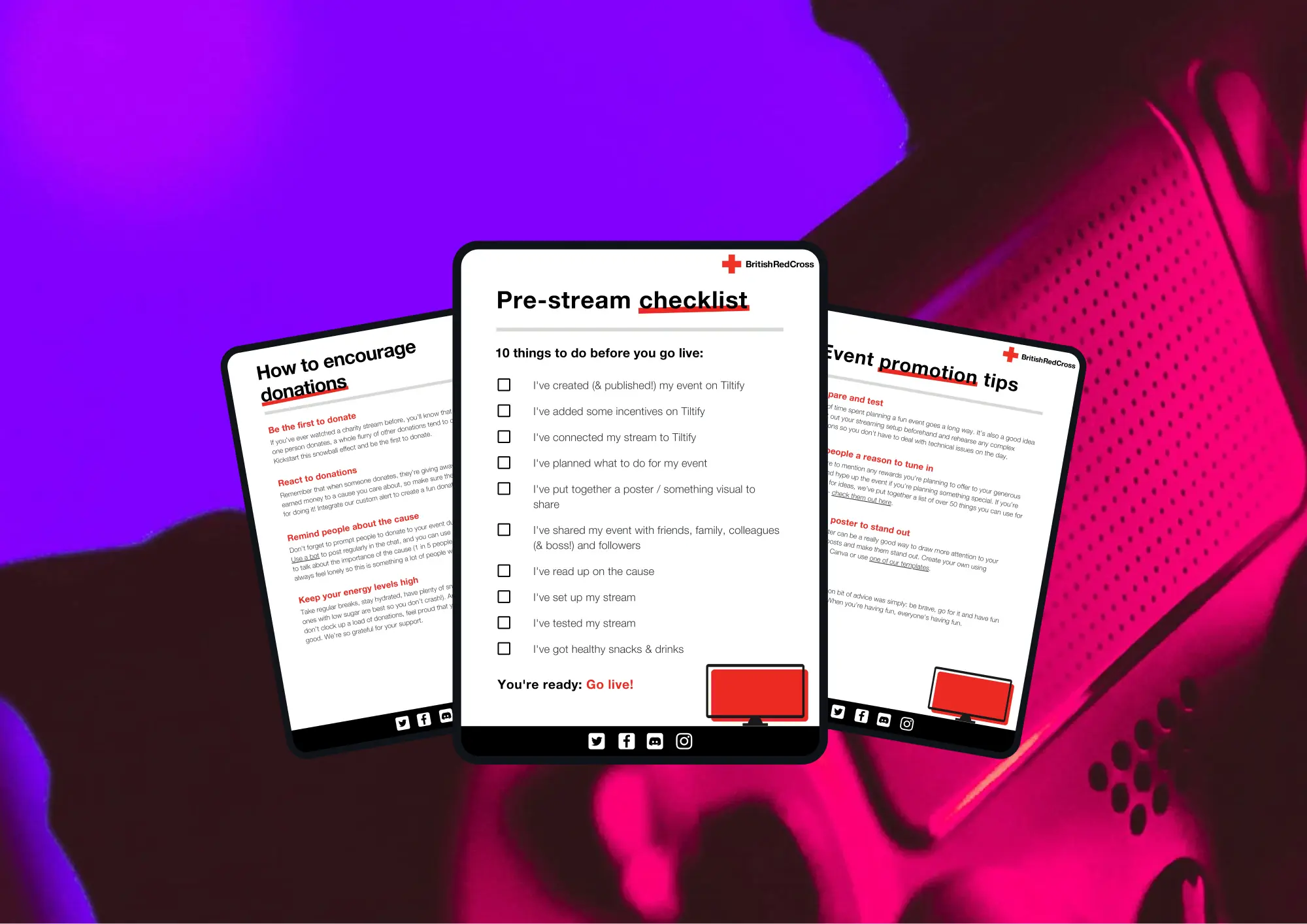
I updated everything from the ads through to the streamer resources. And it took off.
Optimise & scale
Continued A/B testing on ads and landing pages to refine messaging and imagery.
Automated the comms and analytics I’d been running manually — including onboarding emails triggered by where a sign-up had got to, and retargeting for those yet to fundraise.
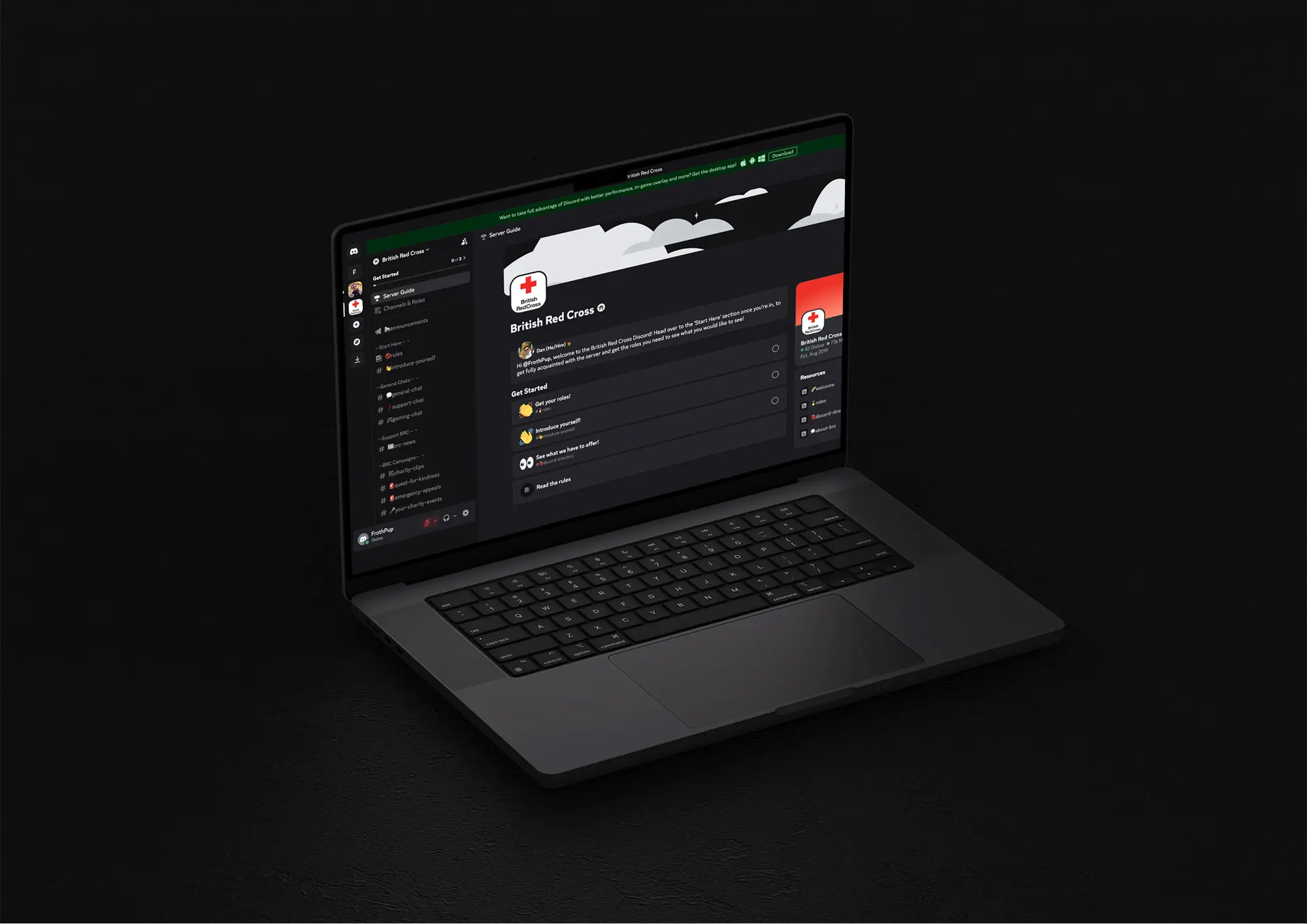
Added Reddit, Google AdWords and corporate partnerships to drive new traffic, monitoring existing channels as we increased ad spend. Set up a Discord channel to field questions and build a sense of community among the fundraisers.
Outcome
$676k raised. 2.1x ROI. 1,850 active fundraisers.
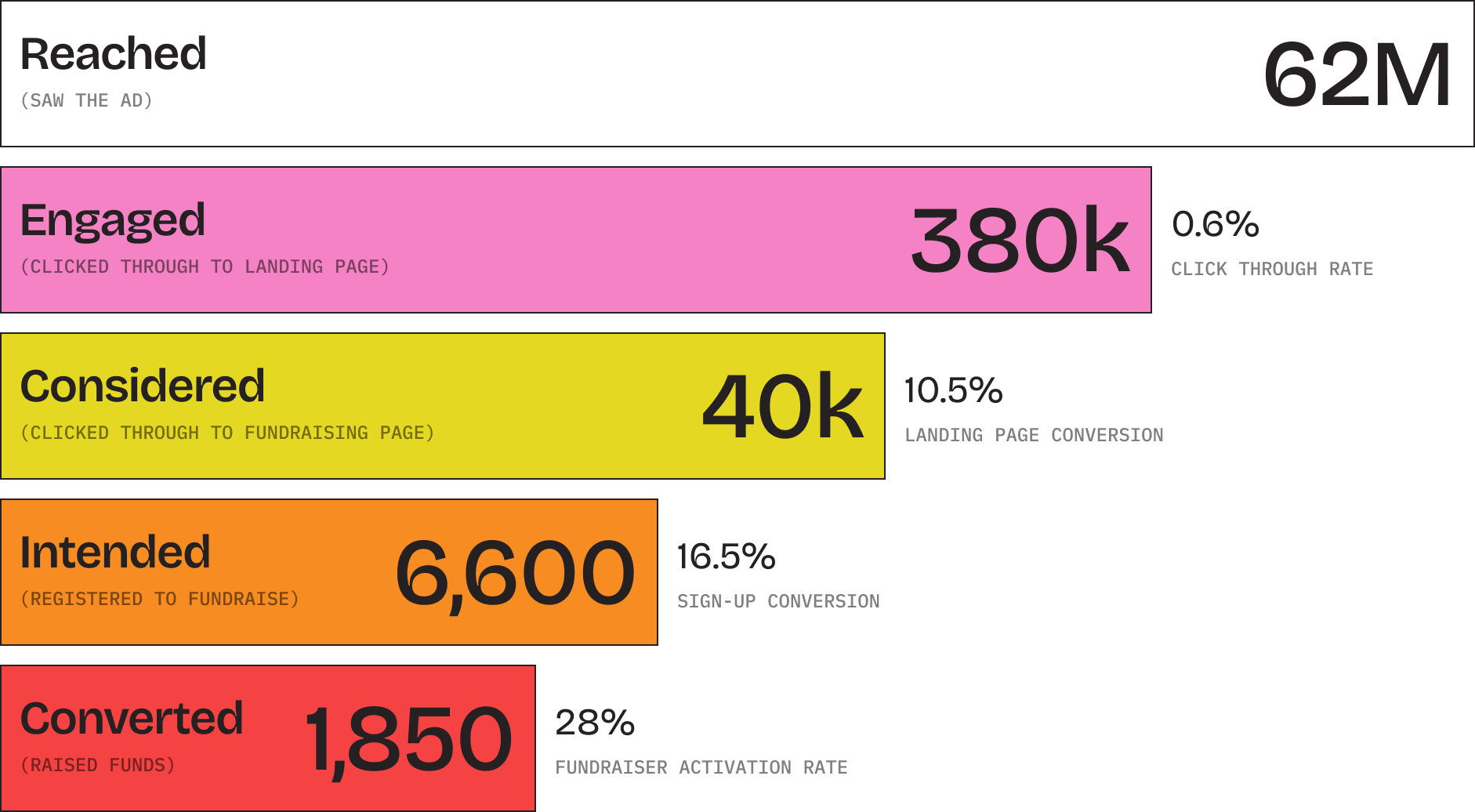
The campaign reached 62 million people, narrowing to 380k landing page clicks (0.6% CTR), 40k fundraising page visits, 6,600 registrations and 1,850 active fundraisers.
The steep drop reflects the scale of broad-reach advertising rather than underperformance — and each stage’s efficiency is what justified narrowing the audience to gamers mid-campaign, which drove stronger downstream conversion.
The funds and the fundraiser count, not the funnel percentages, are the real measure: good targeting, messaging and content eventually drive high-quality conversions.
A full-time manager was brought in to run the new revenue stream. Campaigns have since raised over $2.5m, with many of the original fundraisers returning to stream again.
The campaign also opened the door to corporate partners and larger streamer networks, building the British Red Cross’s reputation and awareness in a market it previously had no presence in.